


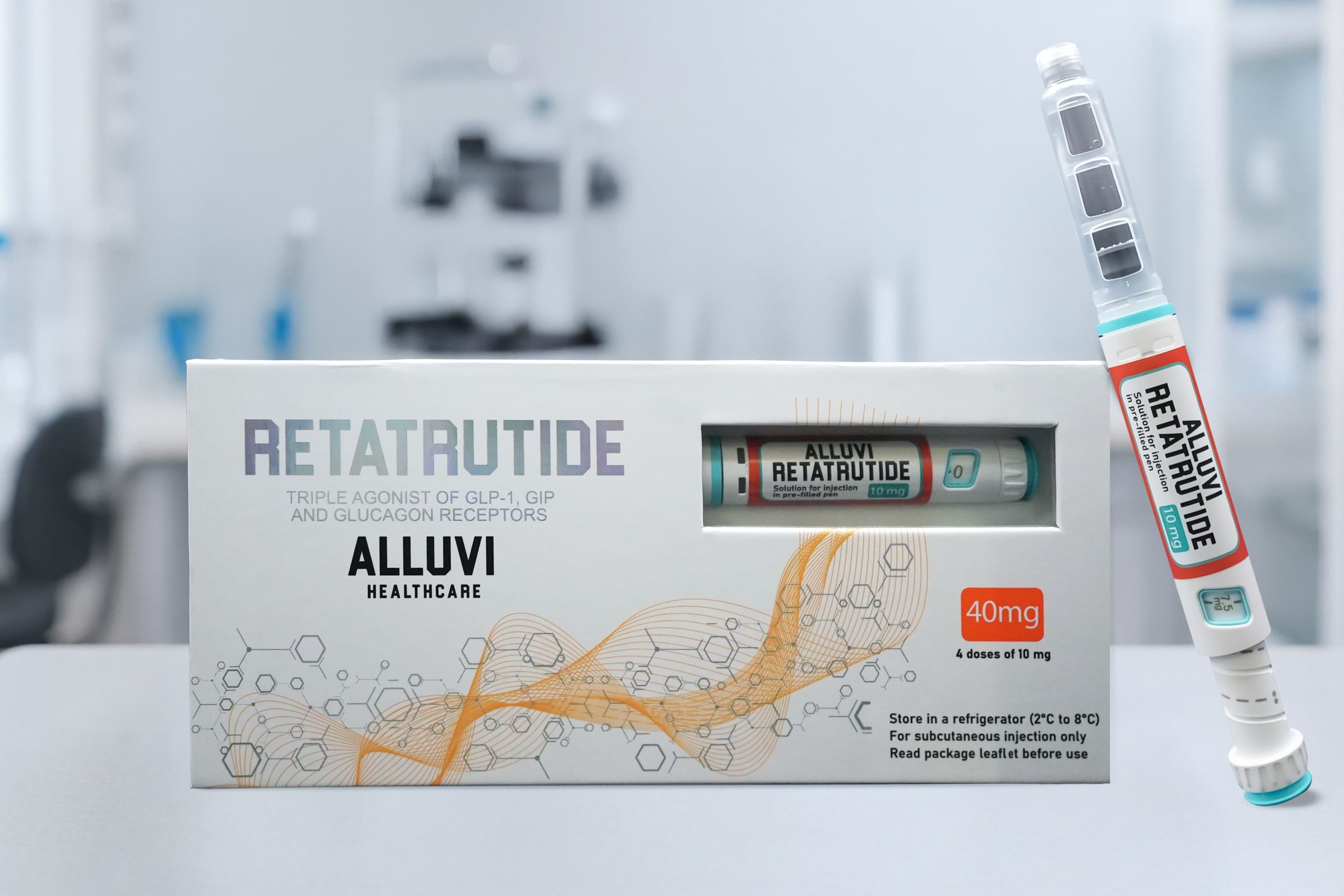
Alluvi Retatrutide 40mg

£239.99
8 week supply
A 40mg Retatrutide formulation supplied in a pre-filled research device, provided exclusively for controlled laboratory R&D applications. Delivered in sealed format to support compound stability analysis, formulation studies, and delivery mechanism evaluation.
Produced for laboratory research only. Not for human or veterinary consumption.
Each Retatrutide 40mg Research kit includes:
Pre-filled Research pen (40mg Retatrutide)
Research information sheet
Storage:
Store refrigerated (2–8°C). Do not freeze.
Supplied in fixed-volume sealed format for laboratory analysis.
Delivery: Dispatched with a cold pack.
Tracked 2 DAY UK Delivery.
Research & Development purposes only
Retatrutide 40 mg: A Comprehensive Overview of a Next-Generation Metabolic Therapy
Retatrutide 40mg is an investigational metabolic drug that has generated significant attention in recent years due to its potential to transform the treatment of obesity, type 2 diabetes, and related cardiometabolic conditions. Developed by Eli Lilly, retatrutide represents a new class of therapies known as triple-hormone receptor agonists, targeting pathways involved in appetite regulation, glucose metabolism, and energy expenditure. While references to “retatrutide 40 mg” often appear in discussions online, it is important to understand the broader scientific context, mechanism of action, and current clinical status of the drug rather than focusing on a specific dose.
What Is Retatrutide 40mg?
Retatrutide 40mg (also known by its research code LY3437943) is a triple agonist that activates three key hormone receptors:
-
GLP-1 (glucagon-like peptide-1) receptor
-
GIP (glucose-dependent insulinotropic polypeptide) receptor
-
Glucagon receptor
This combination distinguishes retatrutide from existing therapies such as semaglutide or tirzepatide, which target one or two of these receptors. By engaging all three pathways simultaneously, retatrutide is designed to produce a more powerful and comprehensive metabolic effect.
Mechanism of Action
The therapeutic promise of retatrutide lies in how these three hormonal systems work together:
-
GLP-1 receptor activation reduces appetite, slows gastric emptying, enhances insulin secretion, and improves glycemic control.
-
GIP receptor activation supports insulin release and may enhance fat metabolism when combined with GLP-1 signaling.
-
Glucagon receptor activation increases energy expenditure and promotes fat breakdown, counterbalancing the reduced caloric intake caused by appetite suppression.
This triple-action mechanism aims not only to reduce caloric intake but also to increase the body’s ability to burn stored fat, addressing obesity from multiple physiological angles.
Clinical Research and Weight Loss Outcomes
Early-phase clinical trials have shown remarkable weight-loss results, exceeding those seen with current GLP-1-based medications. In Phase 2 studies involving adults with obesity, retatrutide demonstrated average weight reductions exceeding 20% of baseline body weight over approximately 48 weeks in some participants. These results positioned retatrutide as one of the most potent investigational weight-loss drugs studied to date.
It is important to note that clinical trials use carefully controlled dosing schedules. Public references to “retatrutide 40 mg” do not reflect approved or standardized treatment protocols, as retatrutide is not yet approved by regulatory authorities such as the FDA or EMA. Dosing in trials is determined by safety, tolerability, and efficacy assessments conducted under medical supervision.
Potential Benefits Beyond Weight Loss
In addition to significant weight reduction, retatrutide has shown promising effects on several cardiometabolic risk factors:
-
Improved blood glucose control, including reductions in HbA1c
-
Lower triglyceride and cholesterol levels
-
Reduced liver fat, suggesting potential utility in non-alcoholic fatty liver disease (NAFLD)
-
Improved insulin sensitivity
These findings suggest that retatrutide may eventually be useful not only for obesity management but also for broader metabolic health improvement.
Safety and Side Effects
As with other incretin-based therapies, the most commonly reported side effects of retatrutide in clinical trials have been gastrointestinal in nature, including:
-
Nausea
-
Vomiting
-
Diarrhea
-
Constipation
These effects are generally dose-dependent and tend to occur during dose escalation phases. Most participants reported mild to moderate symptoms that diminished over time.
Because retatrutide also activates the glucagon receptor, researchers have closely monitored heart rate, blood pressure, and other cardiovascular markers. So far, trial data suggest an acceptable safety profile, but larger Phase 3 trials are necessary to fully characterize long-term risks and benefits.
Retatrutide 40mg: Understanding Dose References
The phrase “retatrutide 40 mg” often appears in online discussions, but it should be approached with caution. Retatrutide remains an investigational compound, and no dose—40 mg or otherwise—has been approved for general medical use. Any mention of specific dosages outside of clinical trials does not reflect established medical guidance.
In clinical research, doses are carefully titrated, often starting low and gradually increasing to minimize side effects and ensure patient safety. Until regulatory approval is granted, retatrutide should only be administered within authorized clinical trials or research settings.
Comparison With Existing Therapies
Retatrutide is frequently compared with current GLP-1 and dual-agonist drugs such as semaglutide and tirzepatide. While those medications have already transformed obesity treatment, retatrutide’s triple-agonist design may offer:
-
Greater average weight loss
-
Enhanced fat mass reduction
-
Broader metabolic benefits
However, with increased potency comes the need for thorough safety evaluation. Long-term outcomes, cardiovascular effects, and real-world tolerability remain under investigation.
Regulatory Status and Future Outlook
As of now, retatrutide is progressing through advanced clinical development but has not yet received regulatory approval. If ongoing Phase 3 trials confirm its efficacy and safety, retatrutide could become a major addition to the next generation of metabolic treatments.
The growing global burden of obesity and metabolic disease has created strong demand for more effective therapies. Retatrutide’s multi-pathway approach reflects a broader shift in medicine toward targeting complex conditions with equally sophisticated solutions.
Conclusion
Retatrutide 40mg represents a significant scientific advancement in the treatment of obesity and metabolic disorders. By combining GLP-1, GIP, and glucagon receptor activation into a single molecule, it offers a powerful, multi-dimensional approach to weight loss and metabolic health. While references to “retatrutide 40 mg” may circulate widely, it is essential to emphasize that retatrutide remains an investigational drug and should only be discussed within a scientific or educational context.
If approved, retatrutide could redefine expectations for pharmacological weight-loss outcomes and open new possibilities for managing obesity and related diseases. Until then, ongoing research will determine whether its early promise translates into safe, effective, and widely accessible treatment.
Related Products

8 weeks supply
A 20mg Retatrutide formulation supplied in a pre-filled research device, provided exclusively for controlled laboratory R&D applications. Delivered in sealed format to support compound stability analysis, formulation studies, and delivery mechanism evaluation.
Produced for laboratory research only. Not for human or veterinary consumption.
Each Retatrutide 20mg Research kit includes:
Pre-filled Research pen (20mg Retatrutide)
Research information sheet
Storage:
Store refrigerated (2–8°C). Do not freeze.
Supplied in fixed-volume sealed format for laboratory analysis.
Delivery: Dispatched with a cold pack.
Tracked 2 DAY UK Delivery.
Research & Development purposes only

Synedica Retatrutide® Injection Pen Kit is the world’s most advanced weight loss solution. Retatrutide is an advanced medication which suppresses appetite leading to significant weight loss. It does this by mimicking the effects of the GLP-1, GIP and glucagon receptors, which are natural hormones that makes humans feel full from eating much smaller portions of food.
The Synedica Retatrutide® 40mg Injection Pen Kit contains 1 pen, 12 disposable needles and an instruction booklet.
Each pen has 40mg which can be delivered across 4 full doses of 10mg, or in increments of 2.5mg, 5mg, 7.5mg or 10mg.
Recommended dosage is 2.5mg for the first 4 weeks, then 5mg for the next 4 weeks. After 8 weeks the weekly dosage may be increased to 7.5mg or 10mg if necessary.
Always consult your doctor, nurse or pharmacist before using any new medication.
Synedica Retatrutide® 40mg Injection Pen Kit is available at selected pharmacies across Germany, and potentially free for German citizens who qualify under Gesetzliche Krankenversicherung.

Reviews
There are no reviews yet.