


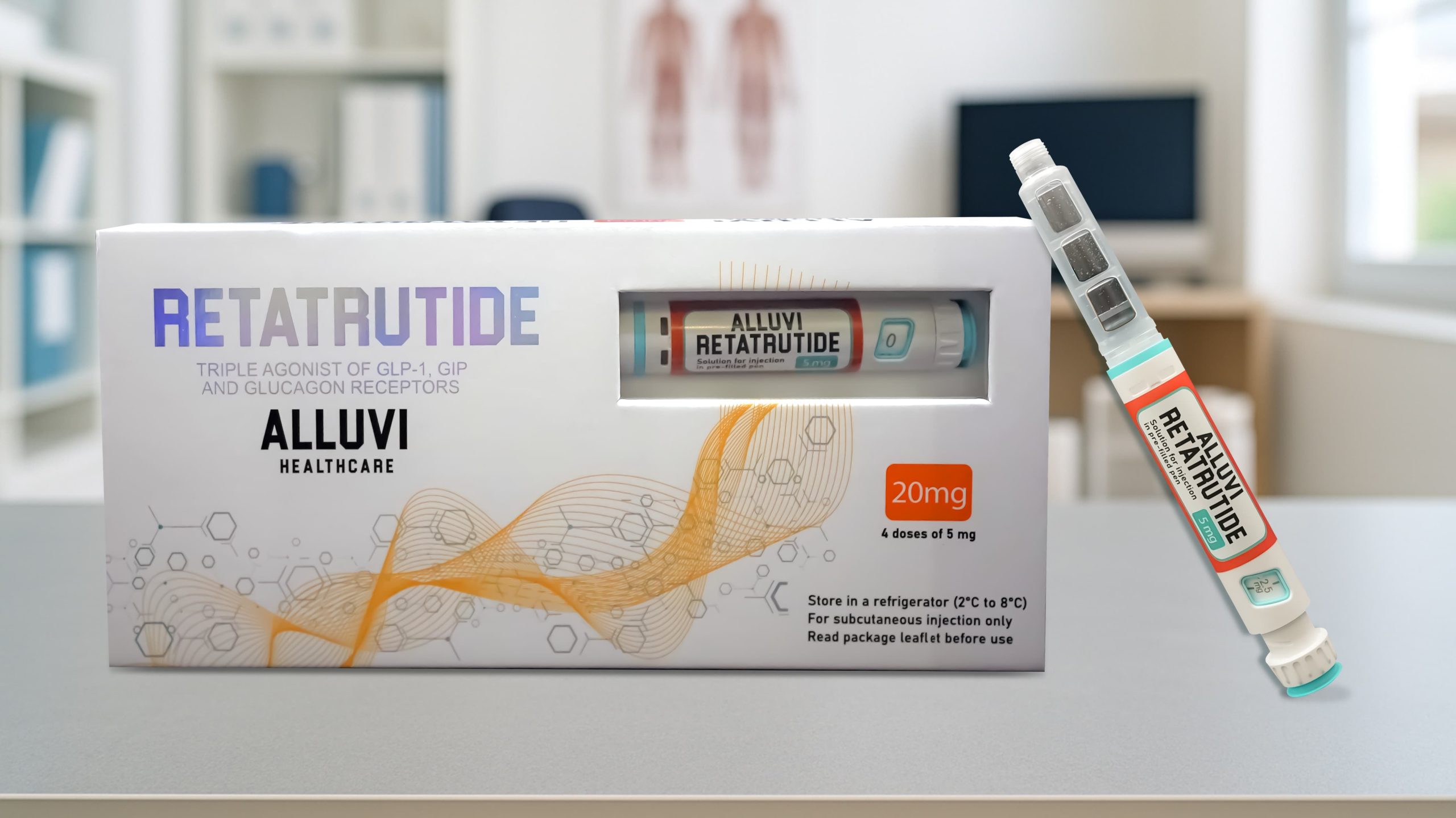
Alluvi Retatrutide 20mg


£149.99
8 weeks supply
A 20mg Retatrutide formulation supplied in a pre-filled research device, provided exclusively for controlled laboratory R&D applications. Delivered in sealed format to support compound stability analysis, formulation studies, and delivery mechanism evaluation.
Produced for laboratory research only. Not for human or veterinary consumption.
Each Retatrutide 20mg Research kit includes:
Pre-filled Research pen (20mg Retatrutide)
Research information sheet
Storage:
Store refrigerated (2–8°C). Do not freeze.
Supplied in fixed-volume sealed format for laboratory analysis.
Delivery: Dispatched with a cold pack.
Tracked 2 DAY UK Delivery.
Research & Development purposes only
Alluvi Retatrutide 20mg: A Comprehensive Guide to This Emerging Metabolic Research Compound
Alluvi Retatrutide 20mg is capturing the attention of the scientific community through its unique triple-agonist mechanism. As interest in next-generation weight management grows, retatrutide stands out because it targets three distinct hormonal pathways: appetite regulation, energy expenditure, and glucose metabolism.
This article provides an educational overview of Retatrutide 20mg. We explore how the compound works, why scientists study it, and how it differs from other metabolic research options. Note: This information serves strictly for educational and research discussion.
What Is Alluvi Retatrutide 20mg?
Alluvi Retatrutide 20mg is an investigational peptide compound designed for metabolic research. Scientists classify it as a triple hormone receptor agonist. This means it simultaneously activates three receptors that regulate human metabolism:
-
GLP-1 (Glucagon-Like Peptide-1)
-
GIP (Glucose-Dependent Insulinotropic Polypeptide)
-
Glucagon Receptor
The “20mg” designation typically refers to a specific research dosage used in experimental contexts. Because regulatory authorities have not yet approved retatrutide for medical use, no official clinical dosage exists for consumers.
How Retatrutide Works in Metabolic Research
Retatrutide’s mechanism of action distinguishes it from earlier, single- or dual-agonist compounds. Each targeted receptor performs a specific role in maintaining metabolic balance.
-
GLP-1 Receptor Activation: This pathway suppresses appetite, delays gastric emptying, and improves the insulin response. It serves as a cornerstone for modern weight-loss research.
-
GIP Receptor Activation: GIP enhances insulin secretion after meals and may help the body process and store energy more efficiently.
-
Glucagon Receptor Activation: Unlike traditional GLP-1 drugs, retatrutide activates the glucagon receptor to increase energy expenditure and promote fat utilization.
By combining these three triggers, retatrutide addresses both calorie intake and energy output simultaneously.
Why Scientists Study Retatrutide 20mg
Early and mid-stage research trials show promising results regarding weight reduction and metabolic health. Currently, researchers investigate retatrutide for its ability to:
-
Support significant body weight reduction.
-
Improve insulin sensitivity.
-
Target fat mass while preserving lean muscle.
-
Enhance lipid profiles.
-
Address obesity-linked metabolic conditions.
Retatrutide 20mg vs. Other Compounds
Retatrutide differs from standard GLP-1 receptor agonists (like semaglutide) and dual-agonists (like tirzepatide) due to its triple-action design.
| Feature | Single Agonist (GLP-1) | Dual Agonist (GLP-1/GIP) | Triple Agonist (Retatrutide) |
| Appetite Suppression | High | High | High |
| Energy Expenditure | Neutral | Low | High |
| Fat Utilization | Moderate | High | Maximum |
Safety and Research Observations
In laboratory settings, retatrutide demonstrates a safety profile similar to other incretin-based compounds. Researchers frequently observe gastrointestinal effects, including:
-
Nausea and Vomiting
-
Diarrhea
-
Constipation
These effects usually depend on the dose and appear most often during the early stages of exposure. Additionally, scientists closely monitor cardiovascular markers because glucagon activation can influence heart rate.
Regulatory Status and Future Applications
Currently, retatrutide remains an investigational compound. It has not received approval from the FDA, EMA, or other global regulatory bodies. Its availability remains limited to authorized research and development contexts.
If it gains approval, retatrutide could revolutionize metabolic medicine. Researchers continue to explore its potential in:
-
Type 2 diabetes studies.
-
Fatty liver disease (NASH/MASH) research.
-
Metabolic syndrome optimization.
Conclusion
Retatrutide 20mg represents a major leap forward in metabolic science. By targeting GLP-1, GIP, and glucagon receptors, it offers a multi-pronged approach to weight loss and glucose control that single-pathway drugs cannot match.
Related Products

8 week supply
A 40mg Retatrutide formulation supplied in a pre-filled research device, provided exclusively for controlled laboratory R&D applications. Delivered in sealed format to support compound stability analysis, formulation studies, and delivery mechanism evaluation.
Produced for laboratory research only. Not for human or veterinary consumption.
Each Retatrutide 40mg Research kit includes:
Pre-filled Research pen (40mg Retatrutide)
Research information sheet
Storage:
Store refrigerated (2–8°C). Do not freeze.
Supplied in fixed-volume sealed format for laboratory analysis.
Delivery: Dispatched with a cold pack.
Tracked 2 DAY UK Delivery.
Research & Development purposes only

Synedica Retatrutide® Injection Pen Kit is the world’s most advanced weight loss solution. Retatrutide is an advanced medication which suppresses appetite leading to significant weight loss. It does this by mimicking the effects of the GLP-1, GIP and glucagon receptors, which are natural hormones that makes humans feel full from eating much smaller portions of food.
The Synedica Retatrutide® 40mg Injection Pen Kit contains 1 pen, 12 disposable needles and an instruction booklet.
Each pen has 40mg which can be delivered across 4 full doses of 10mg, or in increments of 2.5mg, 5mg, 7.5mg or 10mg.
Recommended dosage is 2.5mg for the first 4 weeks, then 5mg for the next 4 weeks. After 8 weeks the weekly dosage may be increased to 7.5mg or 10mg if necessary.
Always consult your doctor, nurse or pharmacist before using any new medication.
Synedica Retatrutide® 40mg Injection Pen Kit is available at selected pharmacies across Germany, and potentially free for German citizens who qualify under Gesetzliche Krankenversicherung.
Reviews
There are no reviews yet.